
Abstract
This systematic review and meta-analysis aimed to determine the effects of Nigella sativa (NS) on respiratory diseases and COVID-19. The identified search terms were used to search PubMed, Scopus, and Web of Science, the Cochrane Library, Ovid, Google Scholar, and EBSCO CINAHL databases through 18 June 2022. The risk of bias was assessed using Cochrane’s ROB2 and ROBINS scales. The meta-analysis and systematic review included 16 studies with a total of 1991 participants. Among the publications included in the study, 11 were randomized controlled trials, 2 were non-randomized clinical trials, 1 was a single-group clinical trial, 1 was a case/placebo study, and 1 was a non-randomized survey study. Nigella sativa was found to have a positive effect on COVID-19 [odds ratio =1.80, 95% confidence interval (CI) =0.21-3.28]. The mean effect size of NS supplementation in respiratory diseases was 1.25, and Cohen’s d (95% CI) ranged from 0.25 to 2.24. As a result, sufficient evidence was found to conclude that the intervention had a positive effect on the experimental group (z=2.46, p=0.01). In people with COVID-19, the group receiving NS supplementation had a higher recovery rate and a lower hospitalization rate. Fewer patients were infected in the group that received NS supplements for protection against COVID-19. Adverse effects reported include insomnia, daytime lethargy (when administered orally), excessive nasal dryness, stomach upset, and headache. There was insufficient evidence that prophylactic use of NS has a positive effect for COVID-19 or respiratory diseases.
Keywords: Nigella sativa, COVID-19, respiratory tract diseases, meta-analysis as topic, systematic review
Introduction
Diseases of the respiratory system are a serious global health problem (). Chronic respiratory diseases pose significant global health challenges and impose severe socio-economic burdens on individuals and society. Chronic respiratory diseases cause significant problems worldwide and impose substantial socio-economic burdens on individuals and society. Chronic obstructive pulmonary disease (COPD) affected approximately 213 million people in 2021 ().
The COVID-19 pandemic caused 5.7 million deaths over a two-year period, and non-COVID-19 lower respiratory tract infections (LRTIs) led to 344 million cases and 2.18 million deaths in 2021 (, ). Although no effective treatment for COVID-19 infection is known, the recommended general measures are supportive (). The inability to fully treat some respiratory diseases, patients’ desire for rapid recovery, or economic inadequacies direct people to traditional and complementary medicine ().
Nigella sativa (NS), which has been used for thousands of years as a spice and food preservative, to cure various ailments, and to protect against diseases, is a flowering plant that grows in Southern Europe and some parts of Asia. Nigella sativa is nutrient-rich and is considered one of the most valuable plants in world history. Nigella sativa seeds contain significant levels of calcium, iron, phosphorus, zinc, copper, pyridoxine, thiamine, niacin, and folic acid (). Studies have reported that NS can be used as an anti-inflammatory and antiviral agent (). Nigella sativa contains pharmacologically active constituents, such as thymoquinone, dithymoquinone, and nigellin, and has been associated with airway relaxation and reduced airway hyperresponsiveness in preclinical asthma models (). In a clinical study in which NS was applied to patients with rhinitis and nasal mucosal congestion, NS reduced itching, rhinorrhea, sneezing episodes, turbinate hypertrophy, and mucosal pallor ().
No meta-analyses or systematic literature reviews on the effect of NS on respiratory diseases, including COVID-19 were found. Researchers note the high prevalence of respiratory diseases in the population and the wide range of effects of NS, despite the absence of an effective treatment for COVID-19. The potential role of NS in preventing or treating respiratory diseases and COVID-19 has not yet been clearly established. Therefore, this systematic review and meta-analysis was designed to determine the effect of NS on respiratory diseases and COVID-19. It will be the first systematic review and meta-analysis to evaluate the effectiveness of NS in COVID-19 and respiratory diseases, and its results are expected to fill a gap in the literature.
Materials and Methods
Study Registration
Preferred Reporting Items for Systematic Reviews and Meta-Analyses guidelines were followed in this systematic review. The study protocol was uploaded to PROSPERO. PROSPERO ID: CRD4202125aldwi80 (https://www.crd.york.ac.uk/prospero/display_record.php?ID=CRD42021254480). Details of the systematic review were developed in accordance with the Cochrane Handbook for Systematic Reviews of Interventions ().
Design and Search Strategy
The PICOS approach was followed in designing the study, comprising participants, intervention, comparison, outcomes, and study design. These details were explained as subheadings. Based on the PICOS strategy, the following research question was formulated: “Do NS and NS derivatives affect the disease process when used in the prevention and treatment of respiratory diseases and infections, including COVID-19?”
No date or age restrictions were applied in the systematic literature review. All academic publications in English to date were included. PubMed, Scopus, Web of Science, Cochrane Library, OVID, Google Scholar, and EBSCO CINAHL databases were. Search terms were derived from MeSH terms (). The databases were searched for the specified terms in the title, abstract, and keywords. The first searches were conducted between 20 December 2021 and 15 April 2022. Second searches were conducted on 18 June 2022 before the meta-analysis was performed. The search was carried out by two independent researchers (S.T. and P.I.), and all titles and abstracts were examined according to inclusion and exclusion criteria by the same two independent researchers. Prior to analysis, a second search was conducted and newly identified publications were included in the study. Data extraction and risk of bias assessments were also performed independently by two authors (S.T. and P.I.). A third investigator (H.S.) checked the extracted data. The following extracted data were recorded in Excel format for each study: respiratory disease studied, authors, title, date, country where the study was conducted, study objective, treatment duration, sample size, mean age of participants, study design, outcomes examined, intervention content, control methods, and results. The Template for Intervention Description and Replication () guideline was used to report the details of the intervention. The following were summarized: what the intervention was; how and where it was applied, the duration and dose of application; the method of application, and to whom it was administered. Mean and standard deviation were used to report age ().
Table 1. Characteristics of the studies included in the systematic review
Disease | Author Year, Country | Title of the study | Objective | Sample Size (I:Intervention, C:Control Group) | Age (Mean±SD) | Study Type | Analyzed Findings | Duration of Treatment /Intervention | Control | Outcome Measures |
|---|---|---|---|---|---|---|---|---|---|---|
Asthma | Boskabady et al. 2007, () Iran | The possible prophylactic effect of Nigella sativa seed extract in asthmatic patients | Prophylactic effect of boiled N.Sativa extract on asthma. | 29 I: 15 C:14 | C: 48.20±11.91 I: 35.87 ± 12.79 | Randomized Controlled Study | Asthma symptom score, Pulmonary function test. Forced vital capacity | 12 Weeks Patients with a previous diagnosis of asthma and two or more of the following symptoms were included: recurrent wheeze, recurrent cough or tightness at rest; wheeze, cough or tightness during the night or early morning; wheeze or cough during exercise, having forced expiratory volume in 1 s (FEV1) and peak expiratory flow (PEF) less than 80% of predicted values, had no history or symptoms of cardiovascular or other respiratory diseases that required treatment Standard asthma treatment + 15 mL/kg of 0.1% g boiled extract daily. | Standard asthma treatment + placebo glucose solution | Nigella Sativa was found to have a positive effect on Asthma. |
Asthma | Koshak et al.() 2017, Saudi Arabia | Nigella sativa Supplementation Improves Asthma Control and Biomarkers: A Randomized, Double- Blind, Placebo-Controlled Trial | To determine the clinical and inflammatory effects of Nigella Sativa in asthmatic patients. | 80 I:40 C: 40 | I:39± 13 C:42±15 | Randomized Controlled Double blind | Primary outcome: Asthma Control Test (ACT) score Secondary outcome: SFT, blood eosinophils, serum IgE results | 4 Weeks 2*500 mg Nigella Sativa Capsules (oral) Patients diagnosed with asthma according to the Global Initiative for Asthma Guidelines | 2*500 mg capsules of olive oil in the same image | It showed that Nigella Sativa supplementation improved asthma control with a tendency to improve respiratory function. |
Asthma | Salem et al. () 2017, Saudi Arabia | Effect of Nigella sativa supplementation on lung function and inflammatory mediators in partly controlled asthma: a randomized controlled trial | Effect on airway inflammation and airflow limitation in partially controlled asthma patients. | 76 | C: 37.1 Group Nigella Sativa-1: 37.5 Group Nigella Sativa-2: 39.2 | One Blind Placebo Randomized Controlled Trial | Clinical evaluation, spirometry, fractional exhaled nitric oxide (FeNO), and serum (IgE) measurements were performed. Blood samples were taken to measure serum cytokine levels only during visit 0 and visit 2. | 12 Weeks Patients with partially controlled asthma, according to the Global Initiative for Asthma guidelines NS-1 group: 2x500mg N.Sativa capsules per day. NS-2 group: 2 g N.Sativa 2 Capsulesx500 mg capsules per day Weeks 6 and 12 were evaluated twice. All medications were taken for 12 weeks in addition to maintenance inhaler therapy. | Control Group: Received placebo one capsule two times a day. | Inhaled Nigella Sativa maintenance therapy improves measures of pulmonary function and inflammation in asthma. |
Asthma | Barlianto et al.() 2017, Indonesia | Effects of Nigella sativa oil on Th1/Th2, cytokine balance, and improvement of asthma control in children | To investigate the potential anti-asthmatic effect of Nigella sativa oil on Th1/Th2 cells, IFN-g/IL-4 cytokines, and improvement of asthma control | 28 C:14 I: 14 | I:8.79± 2.940 C:8.71±3.771 | Clinical Single Blind Randomize | Asthma Control Test (ACT) Scale Th1/Th2 IFN-g/IL-4 | 8 Weeks Patients with a diagnosis of asthma, according to the Global Initiative for Asthma (GINA) guideline, were included. All patients received routine asthma medication. Nigella Sativa Oil was given as adjunctive therapy at a dose of 15-30 mg/kg/day for eight weeks. | Routine asthma medication | Nigella sativa oil supplementation improves IFN-g/IL-4 balance and asthma control in children. |
Asthma | Barlianto et al.() 2018, Indonesia | Improvement of Th17/Treg balance and Asthma Control Test score by Nigella sativa supplementation in asthmatic children: a new approach to managing asthma | To investigate the impact of Nigella sativa on Th17/Treg balance and asthma control in children with asthma. | 28 C :14 I: 14 | C: 8.71±3.771 I: 8.79±2.940 | Randomize single blind | Asthma Control Test (ACT) Scale Th17/Treg cell Peripheral Blood Mononuclear Cells(PBMCs) | 8 Weeks All patients received routine asthma medication. In addition, they received N. Sativa Oil at a dose of 15-30 mg/kg/day for eight weeks. | Routine asthma medication | Nigella sativa oil improves Th17/Treg balance and clinical signs in asthmatic children. |
Asthma | Boskabady et al.() 2010, Iran | Antiasthmatic effect of Nigella sativa in airways of asthmatic patients | To investigate the antiasthmatic effect of Nigella Sativa extract in asthmatic patients. | 15 | 42.80±11.42 | Clinical Trial Prospective Double blind | Pulmonary Function Test | 2 Weeks Patients with a previous diagnosis of asthma and two or more of the specified symptoms were included. Patients on regular asthma medication: 1-oral theophylline syrup, 6mg/kg 2- N.Sativa 50 mg/kg-oral 3- N.Sativa 100 mg/kg orally 4- 200 mg inhaled salbutamol Pulmonary Function Test was performed at 30-60-90-120-150-180 minutes before drug administration. | No control group | Nigella Sativa has been found to have a relatively strong antiasthmatic effect on the airways in asthma patients, with the boiled extract having less effect than theophylline. |
COPD | Al-Azzawi et al.() 2020, Egypt | Therapeutic effects of black seed oil supplementation on chronic obstructive pulmonary disease patients: A randomized controlled double blind clinical trial | The aim of this study was to investigate whether Nigella sativa oil supplementation can improve lung function tests, reduce inflammation and lower levels of oxidant and antioxidant markers in patients with COPD. | 91 C:44 I: 47 | C:55.18 ± 4.27 I:53.74 ±4.68 | Randomised Controlled Trial | Full medical history, complete clinical examination, haematological and biochemical parameters oxidative stress markers, antioxidant markers, inflammatory markers | 12 Weeks Patients with mild to moderate COPD were enrolled in the study and received 2x1 g daily of oral Nigella Sativa oil capsules, in addition to their COPD treatment. | only routine Standard COPD treatment | Supplementation with black seed oil may be an effective complementary therapy to improve lung function and correct antioxidant imbalances in people with COPD. |
COVID-19 | Koshak et al. () 2021, Saudi Arabia | Nigella sativa for the treatment of COVID-19: An open-label randomized controlled clinical trial | To investigate the effect of Nigella sativa oil supplementation on reducing the duration of symptoms and complications in mildly symptomatic COVID-19 patients. | 183 I:91 C :92 | I:35 ± 10 C:36 ± 12 | Randomised Controlled Trial | COVID-19 Symptoms | 10 days Mild COVID-19 patients presenting to the emergency department and outpatient clinics were enrolled and received | Standard maintenance implemented. | Nigella Sativa Oil supplementation was found to lead to faster symptom improvement than traditional care alone for patients with mild COVID-19 infection. |
COVID-19 | Al-Haidari et al.() 2021, Iraq | Preventive Value of Black Seed in People at Risk of Infection with COVID – 19 | To evaluate the preventive effects of Nigella Sativa in reducing the incidence of COVID-19 infection. | 376 C: 188 I: 188 | No information is available. | Clinical controlled study non randomize | The clinical symptoms were assessed. | No information is available. Participants with varying levels of risk for COVID-19, including high, medium, and low, were recruited for the study. They received oral administration of 40 mg/kg. per day of Nigella Sativa. | There was no supply of Nigella sativa. | It has been concluded that Nigella Sativa has the capability of lowering the rates of COVID-19 infections in individuals who are vulnerable. |
COVID-19 | Aldwihi et al.() 2021,Saudi Arabia | Patients’ Behavior Regarding Dietary or Herbal Supplements before and during COVID-19 in Saudi Arabia | To examine the hospitalisation status of individuals who use black seed. | 738 | 36,5 | Survey Descriptive | Status of Black seed use before and during infection and hospitalisation during COVID. | none 2*500 mg oral Nigella Sativa oil daily for 10 days. | none | The utilization of black cumin in COVID-19 infection escalated by 27% within the overall populace. Whilst the outcomes showed a minor decrease in hospitalization necessity among black cumin users, this observation was not considered significant in multivariable logistic regression. |
Lower respiratory tract infection | Ahmad et al.() 2010, India | A study of Nigella sativa oil in the management of wheeze associated lower respiratory tract illness in children | To investigate the impact of Nigella sativa oil on Wheeze-associated Lower Respiratory Tract Infection. | 84 I:43 C: 41 | No information is available. | Randomised Controlled Trial | Respiratory rate, Wheezing, Inspiratory-Expiratory Ratio, Accessory Muscle Use and Oxygen Saturation. Peak expiratory flow rate (PEFR) | 2 Weeks Patients with wheezing on auscultation who were admitted to the Paediatric Clinic as outpatients or inpatients were enrolled for the study. The intervention included administering standard treatment in conjunction with N. Sativa oil at a dose of 0.1 ml/kg per day for a period of 14 days. Patients were assessed and monitored on days 0, 3, 7, 10, and 14 post-intervention. | Standard Treatment (Salbutamol nebule) | Nigella Sativa oil reduced the pulmonary index and increased the peak expiratory flow rate. |
Rhinitis | Nikakhlagh et al.() 2010,Iran | Herbal treatment of allergic rhinitis: the use of Nigella sativa | To examine the anti-inflammatory properties of N. Sativa in individuals experiencing symptoms of allergic rhinitis. | 66 (59 Completed with patients) | 20.81± 7.27 | Prospective, descriptive analytical double-blind case-placebo | Measurements of eosinophil count in the nasal mucosa epithelium and IgE levels in the nasal mucosa were taken before and after the study. | 4 Weeks Patients with allergic rhinitis attending the Otorhinolaryngology Clinic were enrolled. A symptom scale (including nasal itching, congestion, sneezing, rhinorrhoea, turbinate hypertrophy, and mucosal pallor) was administered to patients with rhinitis on days 0-15 and 30. | Plesebo not defined. | The results provide evidence that N. sativa is effective in reducing nasal mucosal congestion, nasal itching, runny nose, sneezing attacks, turbinate hypertrophy and mucosal pallor within the initial 2 weeks (by the 15th day). |
Rhinitis | Işik et al.() 2010, Turkey | Potential adjuvant effects of Nigella sativa seeds to improve specific immunotherapy in allergic rhinitis patients | To examine the impact of Nigella sativa seed supplementation on symptoms, PMN functions, lymphocyte subsets, and haematological parameters in individuals with allergic rhinitis. | I: 24 C:8 | I: 34 C:23 | Randomised Controlled Trial | Symptom scores, functions of polymorphonuclear leukocytes, subsets of lymphocytes and other parameters related to haematology | 8 Weeks After one month of immunotherapy, 12 patients as well as all healthy volunteers were administered N. sativa seed supplementation (2 g/day orally) for 30 days. The remaining 12 patients continued to receive only immunotherapy during the seed supplementation period. | A group consisting of seven patients were administered 0.1 ml saline solution subcutaneously once per week as a placebo for a duration of 2 months. | Nigella sativa seed supplementation could be considered as a potential adjuvant therapy for specific immunotherapy in allergic rhinitis. |
Rhinitis | Alsamarai et al.() 2014, Iraq | Evaluation of Topical Black Seed Oil in the Treatment of Allergic Rhinitis | To assess the therapeutic effectiveness of N.sativa extract as a treatment modality for allergic rhinitis. | 68 C: 30 I: 38 | No information is available. | Randomised Controlled Trial double blind | Clinical examination vital signs day and night symptoms | 6 Weeks Participants with indications of mild, moderate, and severe allergic rhinitis were selected. 2 drops (one in each nostril) intranasally three times a day for 6 weeks. | Food oil for 6 weeks. | Topical application of black seed oil has been found to be an effective treatment for allergic rhinitis, with minimal side effects. |
Rhinitis | Ansari et al.() 2010, Pakistan | Montelukast versus nigella sativa for management of seasonal allergic rhinitis: a single blind comparative clinical trial | To compare the therapeutic efficacy of montelukast with Nigella sativa seeds in patients presenting symptoms of seasonal allergic rhinitis. | 47 Montelukast Group: 24 Nigella Sativa Group: 23 | 31.6±1.9 | Single Blind Non-randomize | Symptoms experienced during the day, symptoms related to the eyes, symptoms experienced at night, vital signs, and the level of eosinophils in the blood. Symptom severity on day 0-7-14 | 2 Weeks Patients attending as outpatients for seasonal allergic rhinitis were enrolled. A daily dosage of 250 mg Nigella Sativa was administered. | Montelukast 10mg per day for a duration of two weeks. | Nigella Sativa proves to be a dependable alternative therapy for seasonal allergic rhinitis without any negative impacts. |
Rhinosinusitis | Rezaeian et al.() 2018, Iran | Effect of Nigella sativa Nasal Spray on the Treatment of Chronic RhinosinusitisWithout a Nasal Polyp | Evaluation of N. sativa efficacy in chronic rhinosinusitis patients without nasal polyps. | 65 C:34 I: 31 | I: 44.12± 13.03 C: 45.50± 12.57 | Randomised Controlled Trial | Endoscopic evaluation score with modified Lund-Kennedy CT scoring with Lund-McKay SNOT-22 survey | 8 Weeks Nigella sativa was administered as two nasal sprays per day for a duration of eight weeks. All patients received a daily dosage of 10 mg of cetirizine tablets and 500 mg of azithromycin tablets for a period of 12 weeks. (Every 12 hours on the first day and then 1 tablet daily should be taken for azithromycin.) | Sodium chloride as a nasal spray 2 sprays a day | The administration of Nigella Sativa intranasal spray was identified as having a positive impact on alleviating symptoms in cases of chronic rhinosinusitis. |
IgE: Immunoglobulin E, IFN-g: IL-4: Interleukin 4, COPD: Chronic obstructive pulmonary disease CT: Computed tomography, SNOT-22: Sino-Nasal Outcome Test-22, SD: Standard deviation
Inclusion criteria: Related to the respiratory system or COVID-19 and the use of NS and its products. Randomized controlled studies (RCTs), clinical controlled studies, case-control studies, and non-randomized survey studies were included.
Exclusion criteria: In vitro studies, studies on animal models, in silico drug trials, protocol studies, studies using other herbal mixtures with NS, and studies not in English.
Population/Participants and Interventions/Comparison
To maximize study capacity, no exclusions were made based on participant type. Participants diagnosed with COVID-19 and other respiratory diseases were included regardless of age, gender, or ethnicity.
Supplementation with NS and its derivatives constituted the intervention. The comparison group consisted of those who did not receive NS supplements and instead received a placebo, routine control, or standard care. Since this study investigated the treatment and preventive effects of NS, studies without a comparison group were also included. Only one of the studies included in the meta-analysis was a non-randomized questionnaire study; however, because it included both a control and an experimental group, it was retained in the meta-analysis.
Outcome
The primary outcomes were the resolution rate of respiratory diseases and COVID-19 symptoms, hospitalization and length of stay, and infection status. No restrictions were placed on additional results. Clinical measurements included hematological parameters, respiratory function tests, including forced vital capacity (FVC), blood eosinophil levels, immunoglobulin E (IgE) level, serum cytokine levels, respiratory rate, wheezing, oxygen saturation, asthma symptom scores, interferon-gamma (IFN-g) interleukin-4 (IL-4) levels, and disease-specific clinical findings (fever, cough, anosmia, fatigue, headache, myalgia).
Risk of Bias
Two independent researchers (ST and PI) evaluated the studies included in the study for the risk of bias. To evaluate the risk of bias, the Cochrane Handbook for Systematic Reviews of Interventions guidelines were used (). The Risk of Bias Scale (RoB2), was used for randomized controlled studies, and the ROBINS-I scale was used for non-randomized studies. Risk of bias assessment for randomized trials includes a randomization process, deviation from intended intervention, missing outcome data, measurement of outcomes, and selection of outcome reports. For non-randomized studies, domains include confounding, selection of participants, classification of interventions, deviation from the intended intervention, missing outcome data, measurement of outcomes, and selection of outcome reports. As a result of the evaluation of each category, RCTs were defined as Low, High, and Of Some Concern, and non-RCTs were defined as Serious, Moderate, and Low.
Statistical Analysis
The RevMan program was used for the meta-analysis. When comparing effects measured by continuous quantitative data, the effect size was calculated as the mean difference (MD) between groups. The statistical significance level was set at α=0.05 and the results were reported with a 95% confidence interval (CI). It is critical to assess heterogeneity when examining the differences between the studies included in the research, i.e., whether the studies show effects in the same direction and of similar magnitude. Although heterogeneity can be assessed using the traditional Cochrane Q statistic (χ², p<0.10), as well as measures such as Tau² and I², this study primarily relied on the I² statistic. This approach quantifies the proportion of total between-study variation attributable to true heterogeneity, facilitating clearer interpretation of the consistency of meta-analysis findings. Accordingly, I² values were presented alongside effect sizes and CIs, enabling a comprehensive assessment of both the statistical significance of the results and the consistency across studies.
Results
Study Selection
A total of 3342 publications were identified as a result of database searches. After removing 756 duplications, 2,586 publications remained. The titles and abstracts of these publications were examined in line with the inclusion/exclusion criteria. Studies using other herbal supplements in conjunction with NS were also excluded. A total of 2,385 publications that did not meet the criteria were excluded. After evaluating the remaining 201 full texts, 185 publications were excluded because the necessary data could not be obtained and the results were unsuitable for the purposes of this study; the remaining 16 publications were included in the systematic review and meta-analysis. Among the publications included in the study, 11 were RCTs, two were non-randomized clinical trials, one was a single-group clinical trial, one was a case-placebo study, and one was a non-randomized survey study. The flowchart illustrating study selection is presented in .
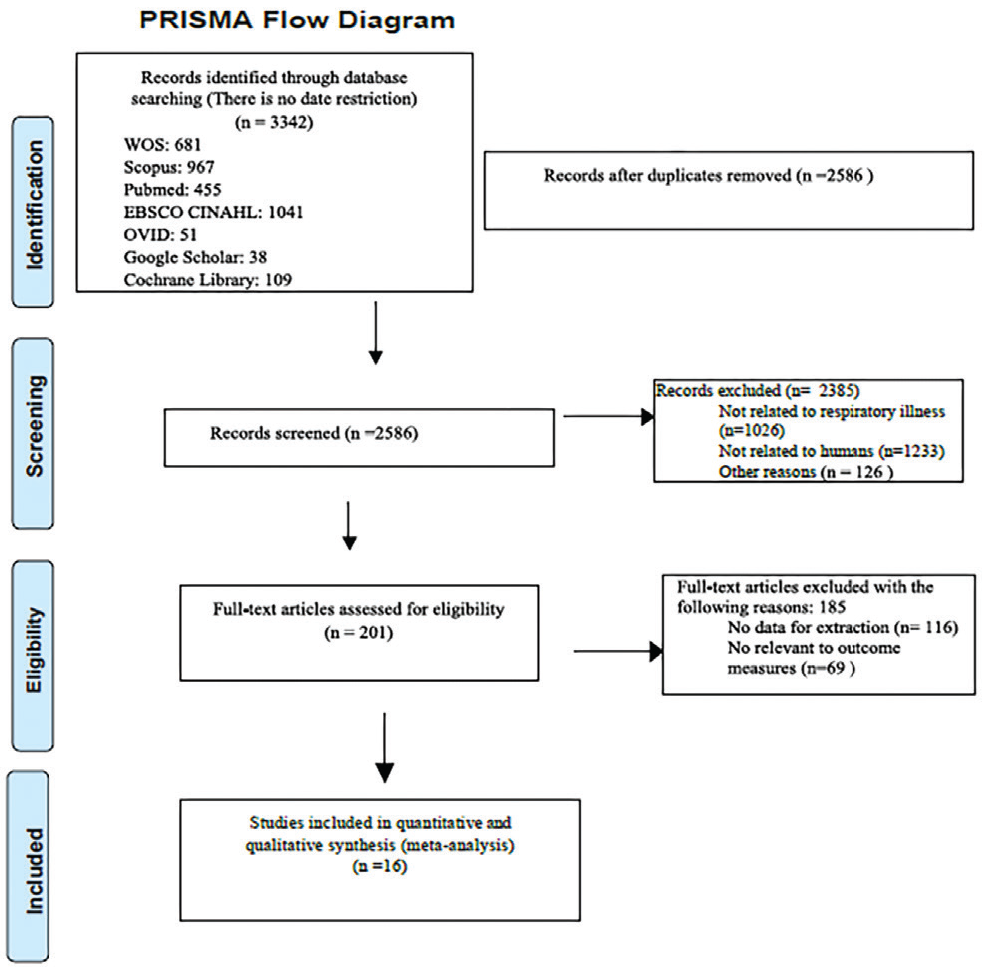
PRISMA: Preferred Reporting Items for Systematic reviews and Meta-analyses
Description of Included Studies
This analysis included 16 studies involving patients with respiratory tract diseases or COVID-19, conducted between 2007 and 2021, comprising a total of 1,991 patients. The studies were conducted in Indonesia (n=2), Iran (n=4), Iraq (n=2), India (n=1), Egypt (n=1), Saudi Arabia (n=4), Pakistan (n=1), and Türkiye (n=1). The clinical areas examined were asthma (n=6), COPD (n=1), LRTI (n=1), COVID-19 (n=3), rhinosinusitis (n=1), and allergic rhinitis (n=4). Nigella sativa was administered in different forms and doses, and its efficacy was evaluated using condition-specific criteria: nasal mucosal eosinophils and IgE levels, symptom scores, hematological parameters (polymorphonuclear leukocyte functions and lymphocyte counts), blood eosinophilia, symptom severity, and vital signs in allergic rhinitis; endoscopic evaluation and Sino-Nasal Outcome Test-22 (SNOT-22) scores in rhinosinusitis; Asthma Control Test scores, pulmonary function tests, blood eosinophilia, serum IgE and cytokine levels, FVC, Th1/Th2 balance, and IFN-g/IL-4 levels in asthma; respiratory rate, wheezing, inspiratory-to-expiratory ratio, use of accessory muscles, and oxygen saturation in LRTI; hematological and biochemical parameters in COPD; and clinical symptoms and hospitalization outcomes in COVID-19. Detailed characteristics of the publications included in the study are presented in .
Risk of Bias
According to the Cochrane RoB2, one study () demonstrated a low risk of bias across all five domains. Appropriate random sequence generation and allocation concealment procedures were implemented in five studies during the randomization process (-). Three studies were rated as having “some concern” due to insufficient information regarding allocation concealment (-). Three studies were judged to have a high risk of bias because of inadequate concealment of allocation (-).
Four studies were rated as having a low risk of bias related to deviations from intended interventions (, , , ). Six studies were classified as having “some concern” because healthcare providers were aware of the assigned interventions (, , , -). One study was rated as having a high risk of bias due to uncertainty regarding baseline group balance (). All studies with missing outcome data were assessed as having a low risk of bias. In the fourth domain, one study was judged to be at risk of bias because outcome assessors were aware of the intervention assignment (). Six studies were assessed as having “some concern” due to insufficient information regarding whether outcome selection adhered to a pre-specified analysis plan (,,-,).
In the ROBINS-I assessment of non-randomized studies, all were judged to have a low risk of bias with respect to participant selection, intervention classification, and selection of reported outcomes. However, one study was rated as having a serious risk of bias because it excluded participants with missing intervention status data (). Risk-of-bias summary tables for the included publications are presented in and .
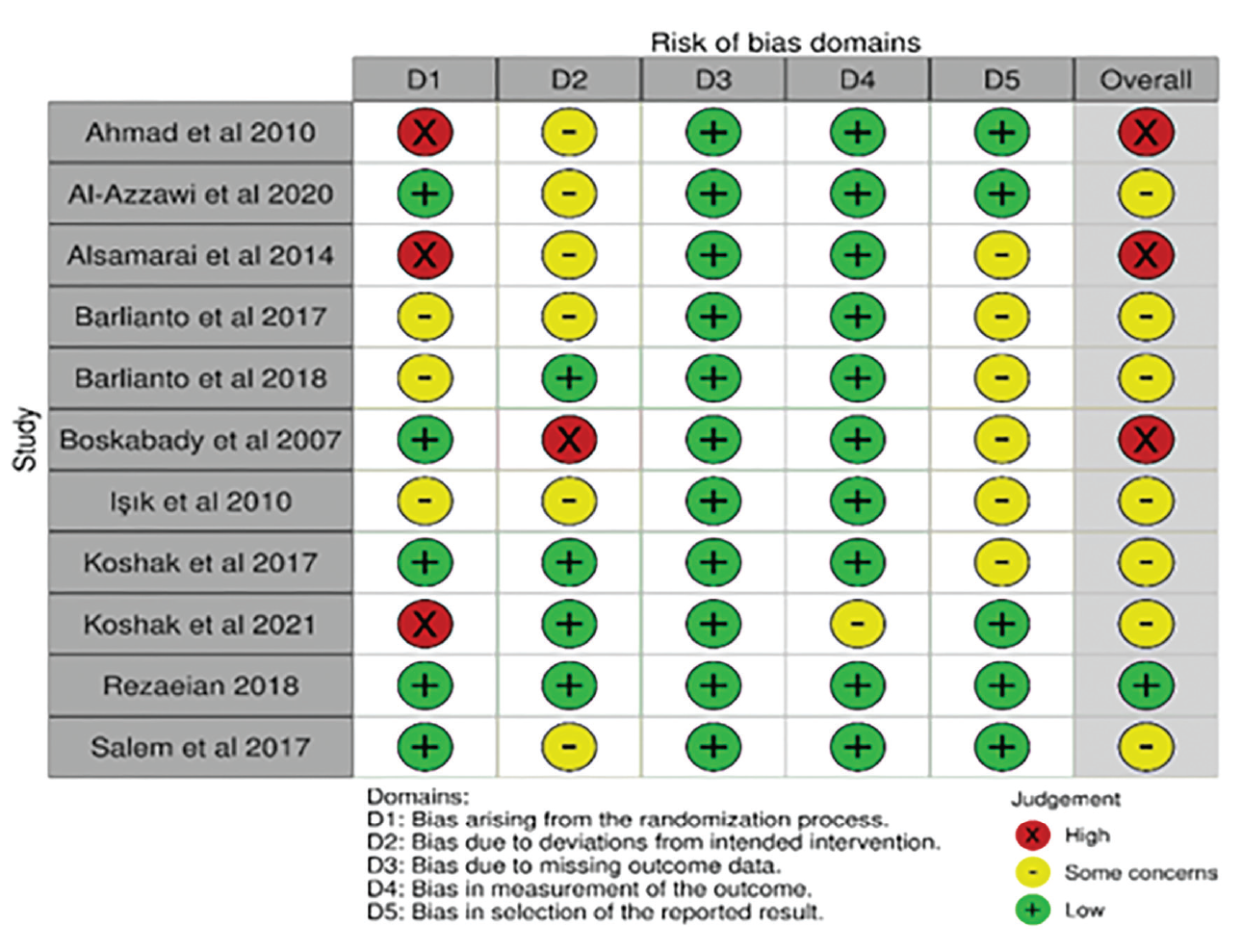
RCT: Randomized controlled study
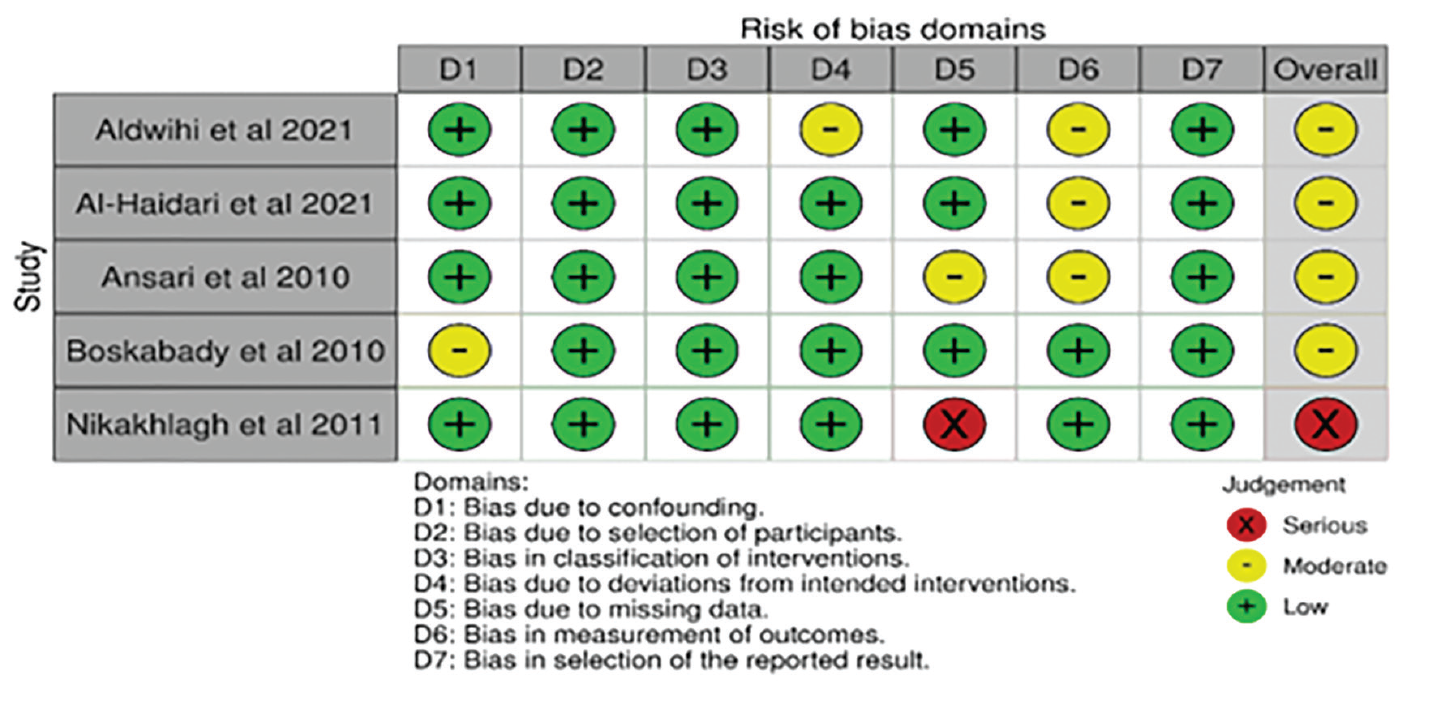
RCT: Randomized controlled study
Outcome
The results of the studies included in the systematic review are presented in narrative form.
Effect of Nigella Sativa on Respiratory Disease
Asthma: Several studies have reported improvements in pulmonary function and immune parameters in patients with asthma receiving NS. Boskabady et al. () observed significant increases in forced expiratory volume in 1 second (FEV1), maximum mid-expiratory flow, and peak expiratory flow (PEF) after administration of 100 mg/kg of NS extract, although the improvements were smaller than those observed with theophylline. Another study using 15 mL/kg of a 0.1% boiled NS extract in combination with standard therapy reported a decrease in FEV1 at the end of the study period (). Nigella sativa supplementation as an adjunct therapy showed 1-4% improvements in predicted FEV1; however, these changes were not statistically significant (). Salem et al. () reported significant increases in FEV1 and PEF with 1-2 g/day of NS administered over 6-12 weeks. Nigella sativa supplementation also reduced peripheral eosinophil counts and IgE levels and modulated immune responses by increasing the Th1/Th2 ratio, reducing the proportion of Th17 cells, and increasing IFN levels in some studies (-).
Lower Respiratory Tract Infection (LRTI): Nigella sativa inhalation (0.1 mL/kg/day) combined with standard therapy improved peak expiratory flow rate (PEFR); however, the differences were not statistically significant ().
In patients with COPD, daily supplementation with 2 g of NS for three months significantly improved all respiratory function parameters compared with controls, with greater percentage changes observed in FEV1%, FVC%, FEV1/FVC%, PEF, and forced expiratory flow 25-75% ().
Nigella sativa supplementation or topical application significantly alleviated symptoms of rhinitis and rhinosinusitis. Nikakhlagh et al. () reported decreases in severe rhinorrhea, nasal itching, and sneezing by day 30. Ansari et al. () observed reductions in daytime symptom scores from 23.86 to 2.9 by day 14. Alsamarai et al. () reported improvements in rhinorrhea (100%), sneezing (89.7%), nasal itching (90%), and nasal obstruction (73.5%). Işik et al. () demonstrated enhanced polymorphonuclear leukocyte phagocytosis and intracellular killing. Patients with chronic rhinosinusitis using NS nasal spray showed significantly lower SNOT-22 scores compared with controls (NS: 14.87±5.01; controls: 23.15±5.01) ().
Effect of Nigella Sativa on COVID-19
Three studies evaluating NS and COVID-19 were included. Al-Haidari et al. () conducted a study assessing the protective effects of NS against COVID-19, in which participants received an oral dose of 40 mg/kg NS once daily. The study reported a lower incidence of infection in the NS group [68 (36.2%)] compared with the control group [180 (95.7%)]. Aldwihi et al. () examined the association between dietary supplement use and hospitalization rates among individuals with COVID-19 before and during infection. Their findings indicated that hospitalization rates were lower among individuals classified as NS users [85 (24.6%)] compared with those who did not use dietary supplements [152 (38.7%)], and this difference was statistically significant. Koshak et al. () administered 500 mg of NS supplements twice daily for 10 days to evaluate the effect of NS on recovery in patients diagnosed with COVID-19. The study reported a higher recovery rate in the NS group [57 (63%)] compared with the control group [32 (35%)].
Meta-Analysis
Effect of Nigella Sativa Supplementation on COVID-19
Two studies evaluated the effect of NS supplementation on COVID-19. The pooled data analysis indicated that NS supplementation was associated with a positive effect size on COVID-19 outcomes (). In a meta-analysis of two studies including 551 patients with COVID-19, NS was shown to be effective in improving COVID-19-related symptoms odds ratio [odds ratio (OR)=10.07, 95% CI: 6.55-15.49; p<0.001; I²=98%)]. In study (), the effect of NS was substantial (OR=37.94; 95% CI=17.59-81.84), accounting for 19.9% of the total weight of the analysis. The other study () reported a lower, but still significant, (OR=3.14; 95% CI=1.72-5.75) and contributed 80.1% of the total analysis weight. Significant heterogeneity between studies was observed (I²=96%; p<0.00001), indicating high variability among the results.
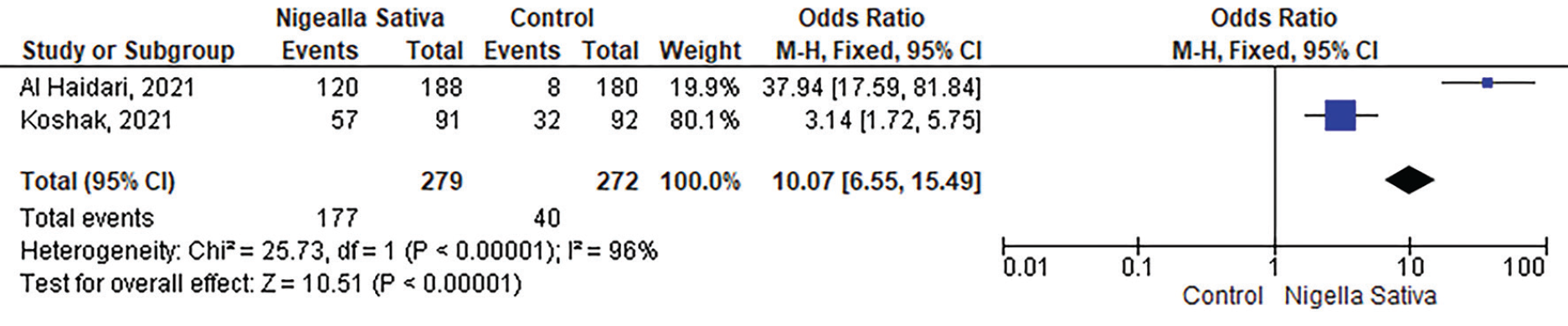
CI: Confidence interval
Effect of Nigella Sativa Supplementation on Asthma
To determine the effect of Nigella sativa in asthma patients, meta-analyses were conducted on three different parameters: Asthma Control Test (ACT) score, IFN-gamma, and IL-4.
ACT Score
In the analysis of 3 studies and 158 patients examining the effect of asthma patients on ACT score, NS increased ACT scores and improved asthma control. [Mean difference (MD): 1.22 (CI 95%: 0.42-2.03; p=0.003; I2=0%)]. No significant heterogeneity was found among the studies included in the analysis (I²=0%; p=0.76), indicating that the results of the studies were consistent with each other ().

ACT: Asthma Control Test, CI: Confidence interval, SD: Standard deviation
IFN-Gama
In two studies examining IFN-γ levels in asthma patients and in an analysis of 78 patients, NS significantly increased IFN-γ levels [MD: 5.46 (95% CI: 3.04-7.88); p< 0.001; I2=91%] ().

CI: Confidence interval, SD: Standard deviation, IFN-gama: Interferon-gamma
In two studies examining IL-4 levels in asthma patients (n=78), NS significantly reduced IL-4 levels [MD: -0.32 (CI 95%: -0.61-0.03); p=0.03; I2=0%] ().

CI: Confidence interval, SD: Standard deviation, IL-: Interleukin 4
Effect of Nigella Sativa Supplementation on Rhinitis
In two studies and in an analysis of 127 patients, NS was significantly effective in improving rhinitis symptoms [OR: 26.12 (CI 95%: 7.87-86.66); p<0.001; I2=0%] ().
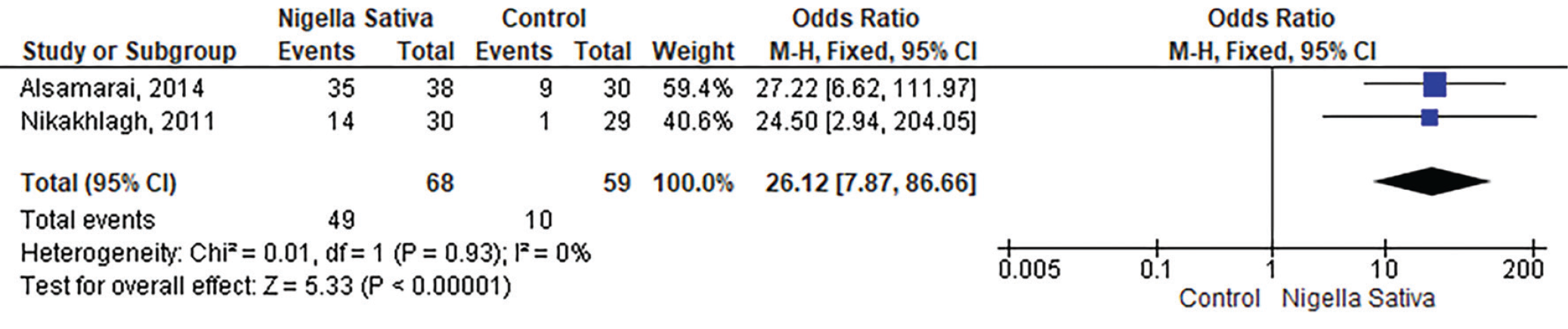
CI: Confidence interval
Safety
The meta-analysis focused on the effect of NS on COVID-19 and respiratory diseases, while safety data on the treatment were also analyzed. Only three studies reported adverse events. In a report of 23 patients with allergic rhinitis who received NS, insomnia occurred in one patient (4.3%), and daytime lethargy after oral administration occurred in two patients (8.6%) (). Excessive nasal dryness (17.8%) has been reported after 5-12 days of topical NS use in patients with allergic rhinitis, and nasal dryness and diarrhea have been reported after systemic use (). Adverse events (stomach upset, headache, and insomnia) were reported in three patients in total: two of 40 in the experimental group and one of 40 in the placebo group among asthma patients administered NS (). In general, adverse events were reported to be mild. In the analysis of three studies reporting side effects of NS, there was no significant difference in side effects between NS and the control group (OR=0.88, 95% CI: 0.39-1.96; p=0.75; I²= 67%) ().
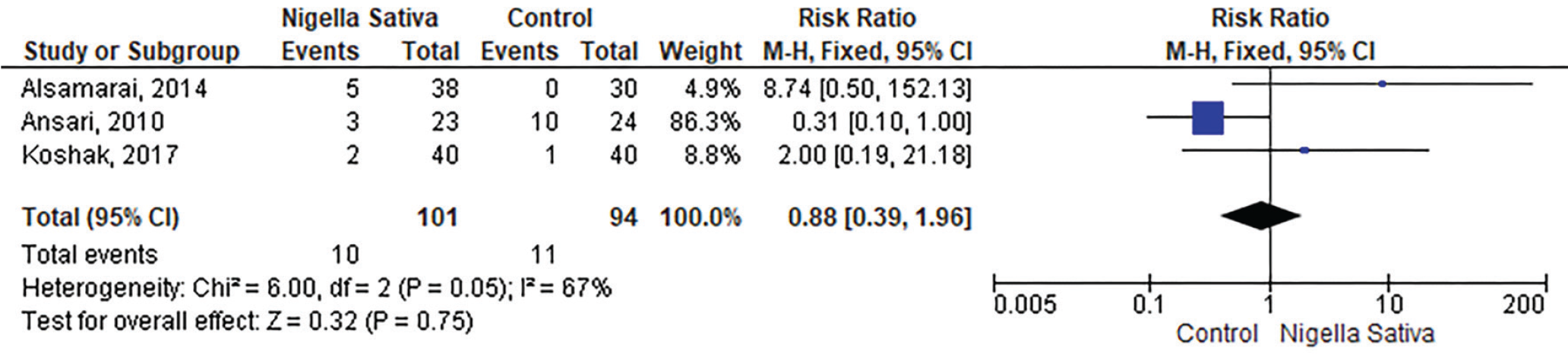
CI: Confidence interval
Discussion
Respiratory diseases have high mortality and morbidity rates worldwide, and COVID-19 is among them (, ). Considering the high morbidity and mortality of these diseases, alternative and complementary medicine practices have become increasingly adopted for prevention and treatment; NS has become one of the most widely used medicinal plants (). Thymoquinone has been reported to inhibit nuclear factor kappa-B signaling pathways by suppressing proinflammatory cytokines (IL-6, TNF-α, and IL-1β), and it has also been found to potentially bind to the spike protein and the main protease of severe acute respiratory syndrome coronavirus 2 (). Nigella sativa has antiviral, antibacterial, antifungal, antiparasitic, antioxidant, anti-inflammatory, immunomodulatory, anticancer, antidiabetic, anti-obesity, hypolipidemic, neuroprotective, cardioprotective, hepatoprotective, antihypertensive, pulmonary-protective, nephroprotective, and gastroprotective effects, as well as effects on fertility and reproduction. It has also been scientifically shown to have skin-protective, anti-osteoporotic, bone-regenerative, and anti-arthritic effects (, ). Due to these properties, this study was designed to determine the effect of NS on respiratory diseases and COVID-19.
This systematic review and meta-analysis demonstrated that NS supplementation affected diseases of the respiratory system and the treatment and prophylaxis of COVID-19. Few studies on this subject were identified in the literature. Eleven of these studies were RCTs, and five were non-RCT studies. Respiratory system diseases examined in the study included asthma, COPD, LRTIs, rhinitis, rhinosinusitis, and COVID-19. According to the results of the systematic review and meta-analysis, asthma patients receiving NS supplements showed improvements in respiratory function tests (-), Asthma Control Test scores (, ), blood eosinophil levels, serum IgE levels (), serum cytokine levels (), blood Th1/Th2 and IFN levels (), and blood Th17 levels (). In patients with COPD, respiratory function tests showed more favorable results in the group receiving NS (). In patients with LRTI, PEFR increased in the NS group (). Symptoms assessed in patients with rhinitis decreased in the NS group (, , ). In patients with rhinosinusitis, symptom questionnaire scores were also lower in the group receiving NS supplements (). When clinicians evaluated recovery status in patients with COVID-19, an infectious viral disease, the recovery rate was higher in the NS group (), and hospitalization () and infection () rates were lower in the NS group (). A study in which NS was supplemented for 12 weeks reported a significant and clinically relevant increase in both ACT scores and FEV1/FVC compared with standard therapy in adolescent patients with asthma (). This result, consistent with findings in the literature, confirms the potential of NS to reduce symptom burden and support clinical and functional improvement in respiratory diseases.
A systematic review and meta-analysis found that treatment durations of NS ranged from 2 to 12 weeks. These studies covered up to 12 weeks of use; however, no data were available regarding the effects of longer-term use. Although the herbal supplement NS appears to have short-term effects, randomized controlled trials are required to determine its long-term efficacy. In a systematic review and meta-analysis investigating different herbal supplement treatments for COVID-19, the duration of herbal supplement use was similar to that reported in our study (). Another systematic review examining dietary supplements and herbal medicines for COVID-19 reported that the duration of herbal supplement use was at most two weeks (). In a systematic review evaluating the effects of NS in patients with rhinosinusitis, the authors reported that the duration of application in humans ranged from 2 weeks to 2 months (). In these studies, in which NS was administered for short periods, recovery rates were high, mortality rates were low, and NS was effective against dyspnea and myalgia. It was also observed to shorten the duration of olfactory impairment (, ). Similarly, in the studies included in this systematic review and meta-analysis, patients receiving short-term NS supplementation showed higher recovery rates from anosmia (), lower hospitalization rates (), and lower rates of COVID-19 infection (). A systematic review of traditional formulations in the management of COVID-19 found that integrative or stand-alone traditional formulations may represent inexpensive, preventive, and therapeutic options for preventing SARS-CoV-2 infection and its clinical symptoms (). Possible sources of heterogeneity among studies include differences in study design, population characteristics, and interventions. Subgroup analyses could not be performed due to an insufficient number of studies. The high heterogeneity observed cannot be attributed to publication bias. Differences in dose and mode of NS administration may have contributed to the observed heterogeneity. This variability suggests that, although NS is promising, its effects may vary depending on specific study conditions, and caution should be exercised when generalizing the results.
Three studies reported side effects, whereas no information on adverse effects was provided in the remaining studies. More comprehensive studies are needed to determine the safety and reliability of NS.
This study aimed to investigate the effect of NS on the prevention and treatment of respiratory system diseases and COVID-19. One study on COVID-19 prevention was identified (); however, there was insufficient evidence to support prophylactic use. Other studies primarily examined the therapeutic effects of NS. Nigella sativa was found to be effective in relieving symptoms and supporting the clinical management of chronic respiratory diseases.
Study Limitations
The use of NS in different forms and formulations (inhalation, extract, tablet, topical application), the lack of detailed explanations regarding its mechanisms of action, and the inclusion of diverse outcome parameters in the meta-analysis may affect the assessment of the overall effect of the intervention. As the included studies were conducted predominantly in Asian and Middle Eastern countries, the results may not be generalizable to the global population. Additional limitations include the fact that not all studies included in the systematic review and meta-analysis were assessed as having a low risk of bias and that only studies published in English were included. The studies included in this meta-analysis had follow-up periods ranging from 2 to 12 weeks; therefore, long-term safety and efficacy data for NS are unavailable, and the findings reflect only short-term effects. Furthermore, some studies compared NS with placebo, whereas others used standard care as the control group. This heterogeneity in control interventions may have influenced the pooled estimates. Despite these limitations, this meta-analysis provides a comprehensive and up-to-date synthesis of the available evidence regarding the effects of NS on COVID-19 and various respiratory diseases. The analysis incorporated both clinical and immunological outcomes, applied rigorous methodological quality assessments (ROB2 and ROBINS-I), and quantitatively combined data to enhance the robustness of the findings. These strengths support the reliability of the observed beneficial effects of NS on respiratory health.
Clinical Implications
Nigella sativa reduces symptoms of respiratory diseases such as asthma, LRTI, rhinitis, rhinosinusitis, and COPD, and has a positive effect on disease treatment when used alone or in combination with standard therapy. It has also been shown to be effective in the prevention and treatment of COVID-19. Nigella sativa may represent a suitable alternative approach to improve disease management and enhance treatment efficacy.
Conclusion
This study synthesizes existing research and provides insights into alternative treatment options. The results of the meta-analysis indicate that NS has a positive effect in the prevention and treatment of respiratory diseases, including asthma, COPD, rhinitis, rhinosinusitis, LRTI, and COVID-19. However, these findings are derived from a limited number of studies and therefore have inherent limitations. High-quality clinical trials are required to further substantiate these results.
Footnotes
Acknowledgments
The authors are grateful to Mr. Atilla Yuna for his technical support.
Authorship Contributions
Surgical and Medical Practices: H.S., Concept: H.S., P.I., Design: H.S., S.T., Data Collection or Processing: H.S., S.T., Analysis or Interpretation: H.S., P.I., Literature Search: S.T., P.I., Writing: H.S., S.T., P.I.
Conflict of Interest: There is no conflict of interest between the authors.
Financial Disclosure: The authors declared that this study received no financial support.
References
GBD Chronic Respiratory Disease Collaborators. Prevalence and attributable health burden of chronic respiratory diseases, 1990-2017: a systematic analysis for the Global Burden of Disease Study 2017. Lancet Respir Med. 2020;8:585-96.
Wang Z, Lin J, Liang L, et al. Global, regional, and national burden of chronic obstructive pulmonary disease and its attributable risk factors from 1990 to 2021: an analysis for the Global Burden of Disease Study 2021. Respir Res. 2025;26:2.
Levine SM, Marciniuk DD. Global impact of respiratory disease: what can we do, together, to make a difference? Chest. 2022;161:1153-4.
GBD 2021 Lower Respiratory Infections and Antimicrobial Resistance Collaborators. Global, regional, and national incidence and mortality burden of non-COVID-19 lower respiratory infections and aetiologies, 1990-2021: a systematic analysis from the Global Burden of Disease Study 2021. Lancet Infect Dis. 2024;24:974-1002.
Hayat L, Beker CM, Karaca A, Hafizoglu N, Kinik K, Yilmaz FM. Antibody false positivity among covid-19 convalescent plasma donors: a comparative study from the turkish red crescent blood center. Haseki Tip Bulteni. 2021;59:353-7.
Yücel D, Yücel E. Plants used in complementary medicine in the treatment of respiratory tract diseases in Türkiye. Ant J Bot. 2022;6:18-26.
Pop RM, Vassilopoulou E, Jianu ME, et al. Nigella sativa oil attenuates inflammation and oxidative stress in experimental myocardial infarction. BMC Complement Med Ther. 2024;24:362.
Aslani MR, Saadat S, Boskabady MH. Comprehensive and updated review on anti-oxidant effects of Nigella sativa and its constituent, thymoquinone, in various disorders. Iran J Basic Med Sci. 2024;27:923-51.
Ghobadi H, Mohammadzadeh E, Aslani MR. Effects of Nigella sativa and its constituents on inflammatory markers in ovalbumin-induced asthma model: a preclinical systematic review and meta-analysis. Inflammopharmacology. 2025;33:5067-83.
Nikakhlagh S, Rahim F, Aryani FH, Syahpoush A, Brougerdnya MG, Saki N. Herbal treatment of allergic rhinitis: the use of Nigella sativa. Am J Otolaryngol. 2011;32:402-7.
Higgins JPT, Thomas J, Chandler J, Cumpston M, Li T, Page MJ WV. Cochrane Handbook for Systematic Reviews of Interventions. version 6. Cochrane; 2021. updated February 2021.
Hoffmann TC, Glasziou PP, Boutron I, et al. Better reporting of interventions: template for intervention description and replication (TIDieR) checklist and guide. BMJ. 2014;348:g1687.
Rezaeian A, Amoushahi Khouzani S. Effect of nigella sativa nasal spray on the treatment of chronic rhinosinusitis without a nasal polyp. Allergy Rhinol (Providence). 2018;9:2152656718800059.
Al-Azzawi MA, AboZaid MMN, Ibrahem RAL, Sakr MA. Therapeutic effects of black seed oil supplementation on chronic obstructive pulmonary disease patients: a randomized controlled double blind clinical trial. Heliyon. 2020;6:e04711.
Boskabady MH, Javan H, Sajady M, Rakhshandeh H. The possible prophylactic effect of nigella sativa seed extract in asthmatic patients. Fundam Clin Pharmacol. 2007;21:559-66.
Koshak A, Wei L, Koshak E, et al. Nigella sativa supplementation improves asthma control and biomarkers: a randomized, double-blind, placebo-controlled trial. Phytother Res. 2017;31:403-9.
Salem AM, Bamosa AO, Qutub HO, et al. Effect of Nigella sativa supplementation on lung function and inflammatory mediatorsin partly controlled asthma: a randomized controlled trial. Ann Saudi Med. 2017;37:64-71.
Barlianto W, Rachmawati M, Irawan M, Wulandari D. Effects of Nigella sativa oil on Th1/Th2, cytokine balance, and improvement of asthma control in children. Paediatr Indones. 2017;51:207-12.
Barlianto W, Wulandari D, Chusniyah M, Kusuma HC, Prawiro SR. Improvement of Th17/Treg balance and Asthma Control Test score by Nigella sativa supplementation in asthmatic children: a new approach to managing asthma. Turk J Immunol. 2018;1:1-7.
Işik H, Cevikbaş A, Gürer US, et al. Potential adjuvant effects of Nigella sativa seeds to improve specific immunotherapy in allergic rhinitis patients. Med Princ Pract. 2010;19:206-11.
Ahmad J, Ali Khan R, Malik MA. A study of Nigella sativa oil in the management of wheeze associated lower respiratory tract illness in children. Afr J Pharm Pharmacol. 2010;4:436-9.
Alsamarai AM, Abdulsatar M, Ahmed Alobaidi AH. Evaluation of topical black seed oil in the treatment of allergic rhinitis. Antiinflamm Antiallergy Agents Med Chem. 2014;13:75-82.
Koshak AE, Koshak EA, Mobeireek AF, et al. Nigella sativa for the treatment of COVID-19: an open-label randomized controlled clinical trial. Complement Ther Med. 2021;61:102769.
Boskabady MH, Mohsenpoor N, Takaloo L. Antiasthmatic effect of Nigella sativa in airways of asthmatic patients. Phytomedicine. 2010;17:707-13.
Ansari MA, Ansari NA, Junejo SA. Montelukast versus nigella sativa for management of seasonal allergic rhinitis: a single blind comparative clinical trial. Pak J Med Sci. 2010;26:249-54.
Al-Haidari KAA, Faiq TN, Ghareeb OA. Preventive value of black seed in people at risk of infection with COVID - 19. Pakistan Journal of Medical and Health Sciences. 2021;15:384-7.
Aldwihi LA, Khan SI, Alamri FF, et al. Patients’ behavior regarding dietary or herbal supplements before and during COVID-19 in Saudi Arabia. Int J Environ Res Public Health. 2021;18:5086.
Pishgar E, Fanni Z, Tavakkolinia J, Mohammadi A, Kiani B, Bergquist R. Mortality rates due to respiratory tract diseases in Tehran, Iran during 2008-2018: a spatiotemporal, cross-sectional study. BMC Public Health. 2020;20:1414.
Khazdair MR, Ghafari S, Sadeghi M. Possible therapeutic effects of Nigella sativa and its thymoquinone on COVID-19. Pharm Biol. 2021;59:696-703.
Kohandel Z, Farkhondeh T, Aschner M, Samarghandian S. Anti-inflammatory effects of thymoquinone and its protective effects against several diseases. Biomed Pharmacother. 2021;138:111492.
Hannan MA, Rahman MA, Sohag AAM, et al. Black cumin (Nigella sativa L.): a comprehensive review on phytochemistry, health benefits, molecular pharmacology, and safety. Nutrients. 2021;13:1784.
Alberts A, Moldoveanu ET, Niculescu AG, Grumezescu AM. Nigella sativa: a comprehensive review of its therapeutic potential, pharmacological properties, and clinical applications. Int J Mol Sci. 2024;25:13410.
Areej SR, Khan MS, Khan MGJ. Assessment of Nigella sativa (black seed) supplementation in improving asthma control among adolescents. IRABCS [Internet]. 2025;3:46-51.
Komariah M, Amirah S, Maulana S, et al. The efficacy of herbs as complementary and alternative therapy in recovery and clinical outcome among people with COVID-19: a systematic review, meta-analysis, and meta-regression. Ther Clin Risk Manag. 2023;19:611-27.
Feng Z, Yang J, Xu M, et al. Dietary supplements and herbal medicine for COVID-19: a systematic review of randomized control trials. Clin Nutr ESPEN. 2021;44:50-60.
Muhamad Najemudin MN, Anas Mahmood MZ, Zaini S, Yusof NA. The effects of Nigella sativa (black seed) in rhinosinusitis subjects: a systematic review. Journal of Pharmacy. 2025;5:132-55.
Bhandari RB, Balkrishna A, Maheshkumar K, Arumugam VA. Traditional formulations for managing COVID-19: a systematic review. J Integr Complement Med. 2024;30:420-30.
Supplementary Materials
Supplemental file
Download